It's been almost two years since I wrote my "lens review" on the Projection Optics Company 18″ E.F.. Since then I've got several mails and seen some online discussions on it. So I thought I'd do a quick update with some additional wide aperture wet plate lens hacks I've been playing with. This article will mainly list some technical details (mainly coverage) on the lenses as well as my experience using them. For a more in-depth discussion on the trade-offs of using a projection lens for wet plate see my previous post.
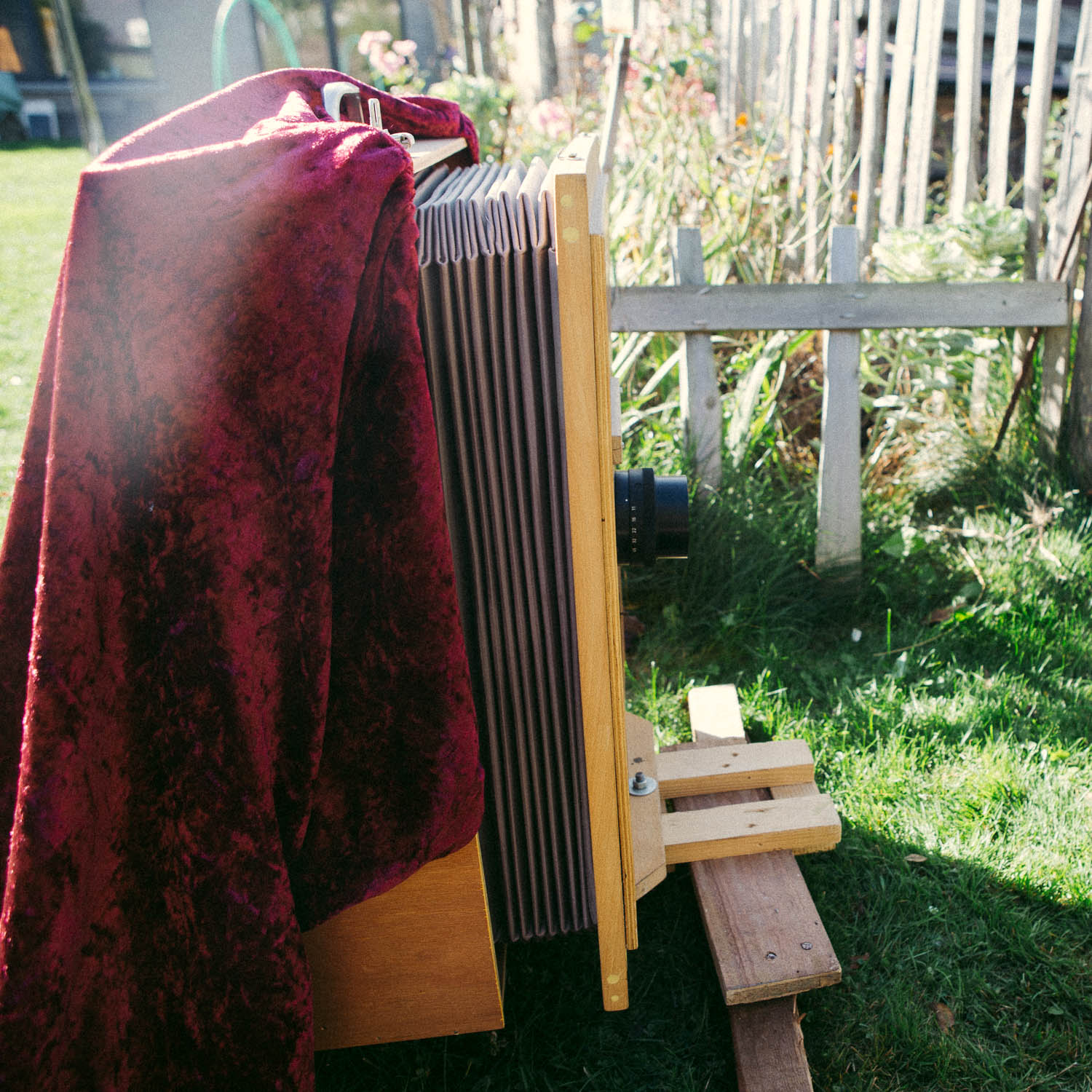
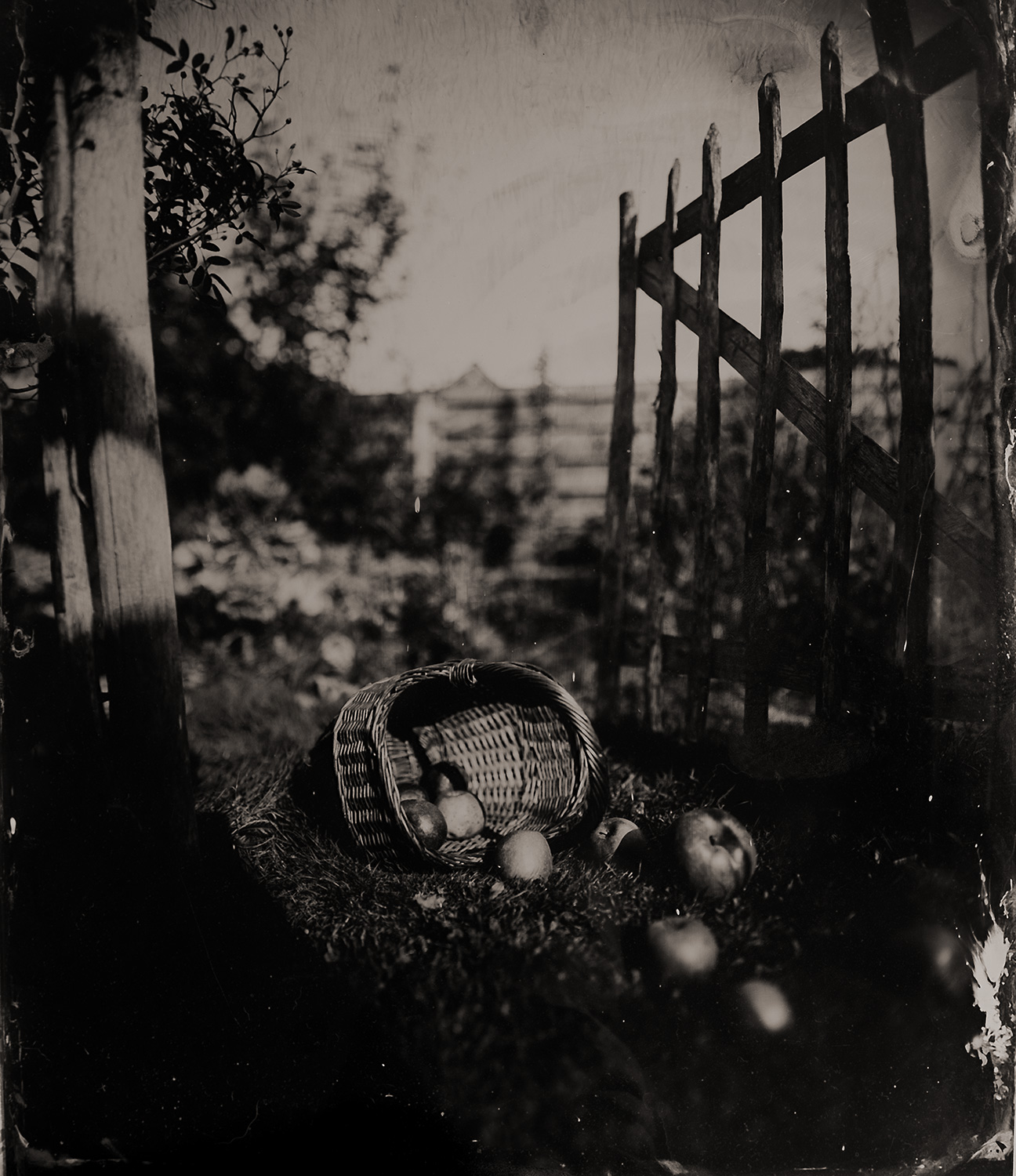
First off I still use the 18″ lens quite often. It's just that on a smaller camera you want a smaller lens, so I started looking around for something more portable. Note that unless stated otherwise all the sample plates in this article are 18 × 24 cm (roughly 8×10″).
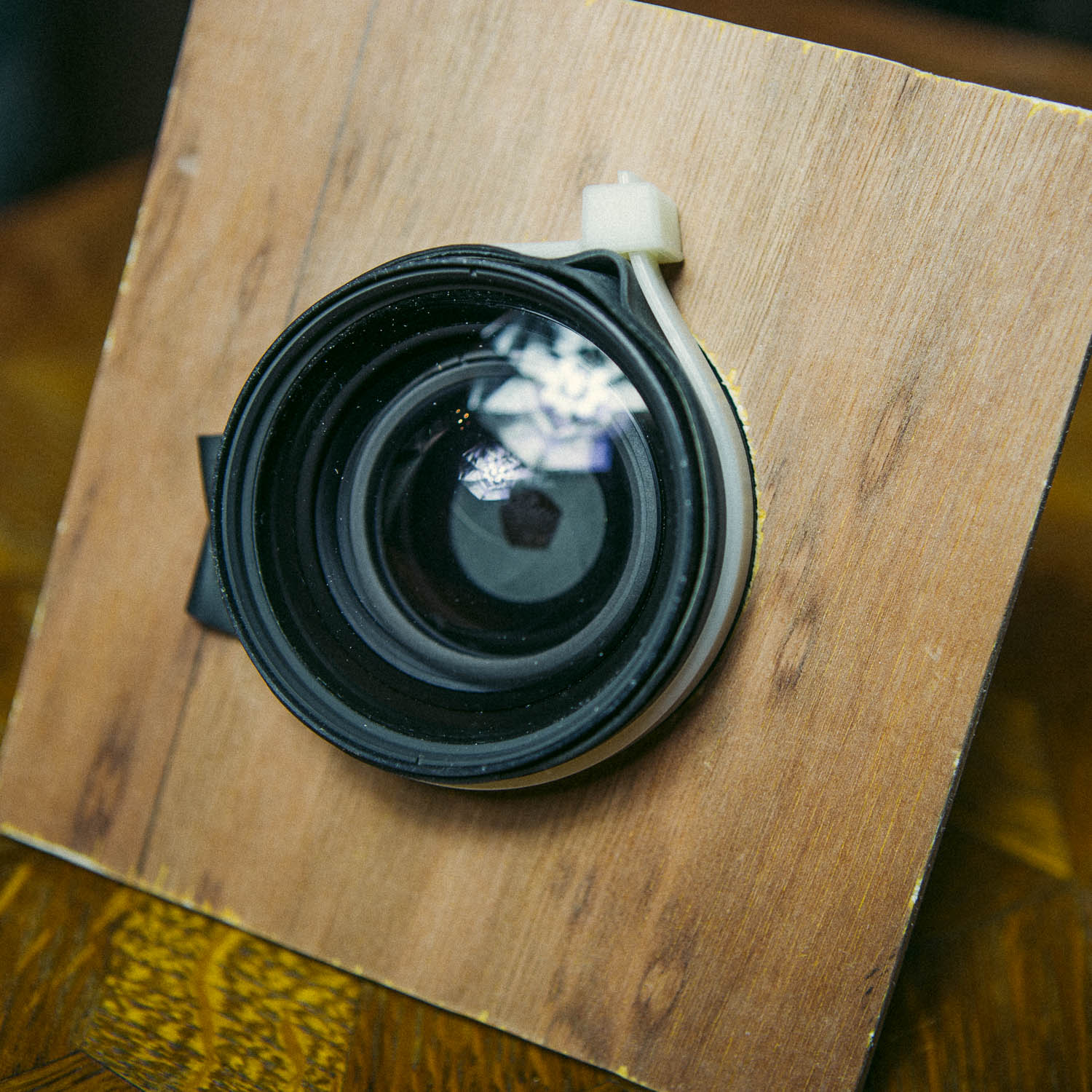
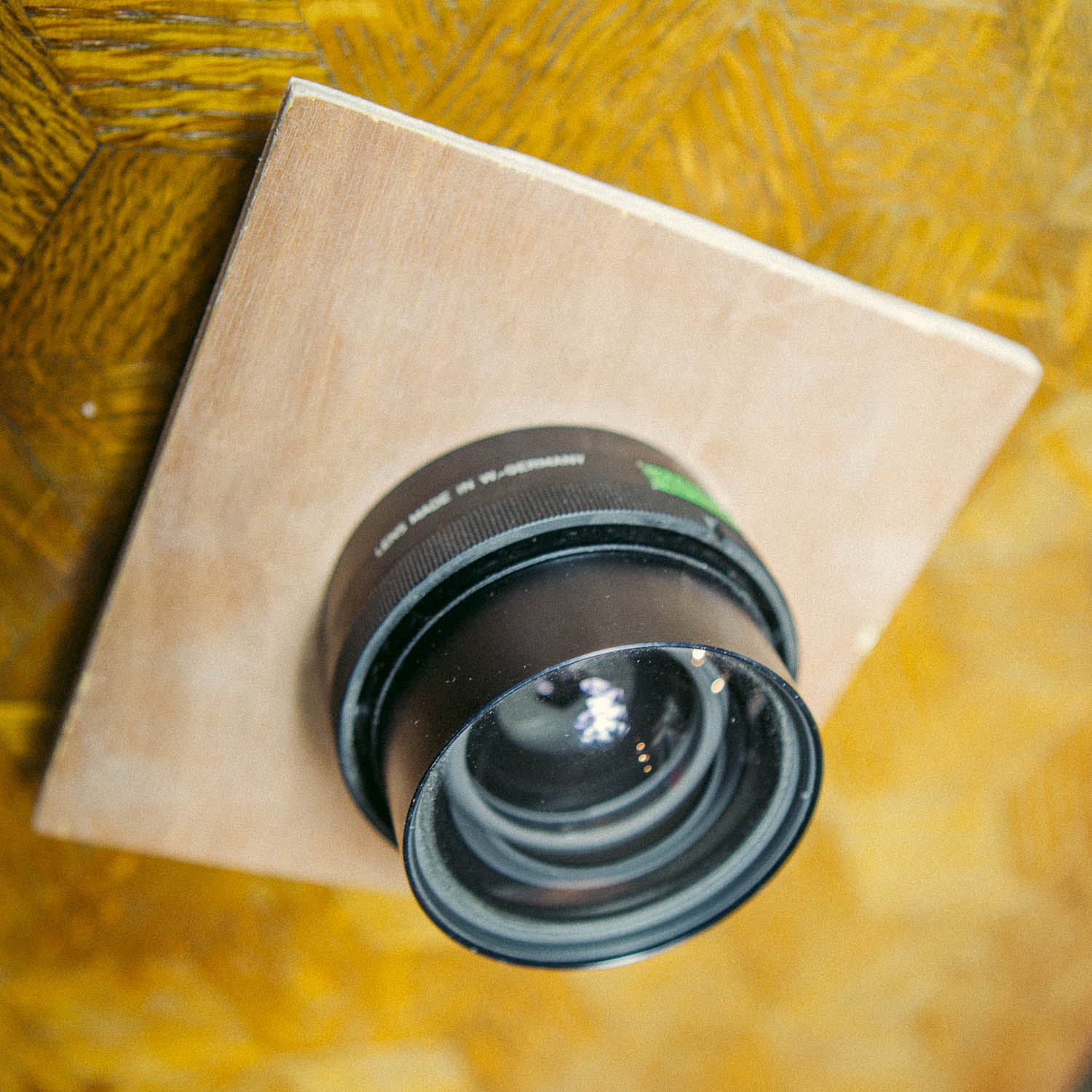
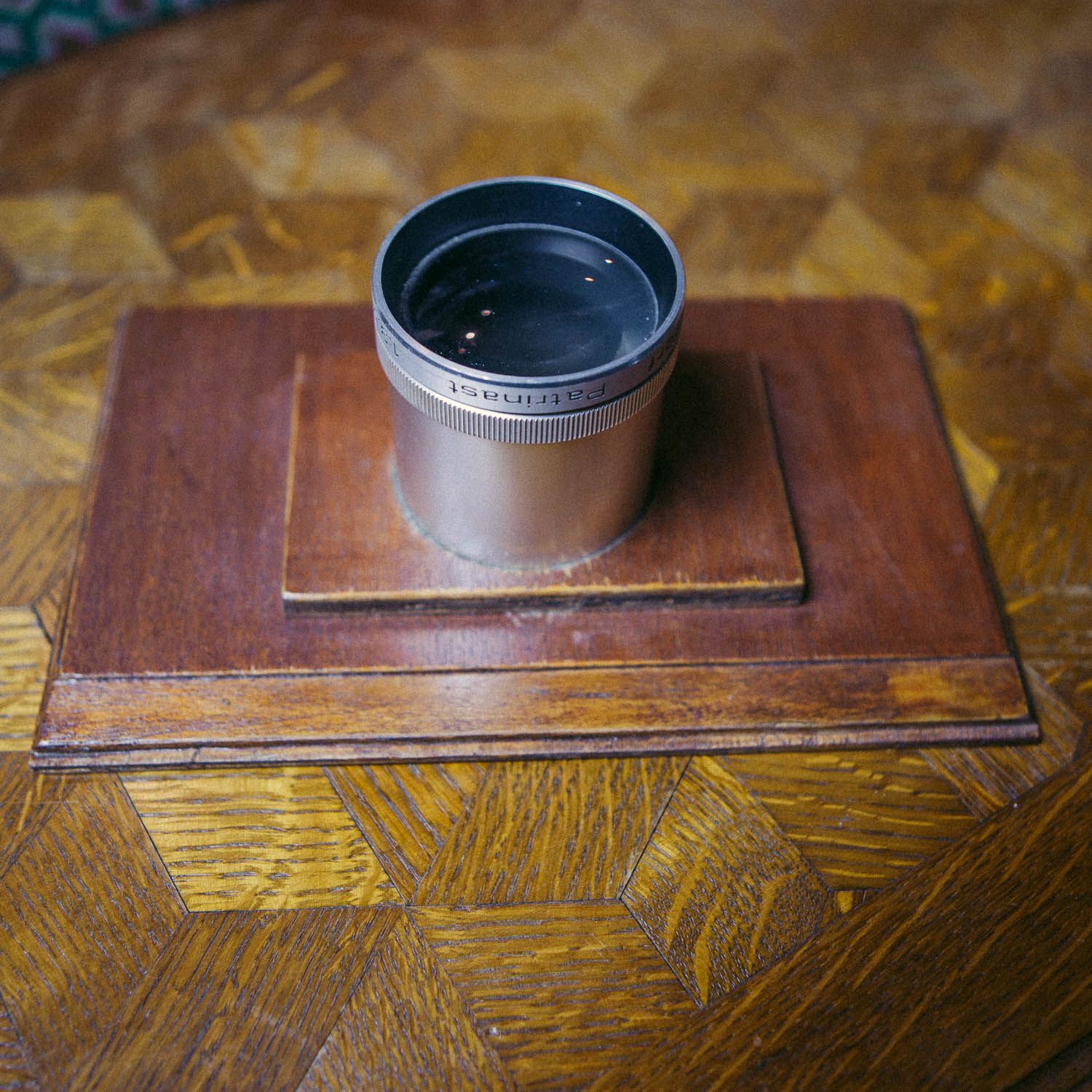
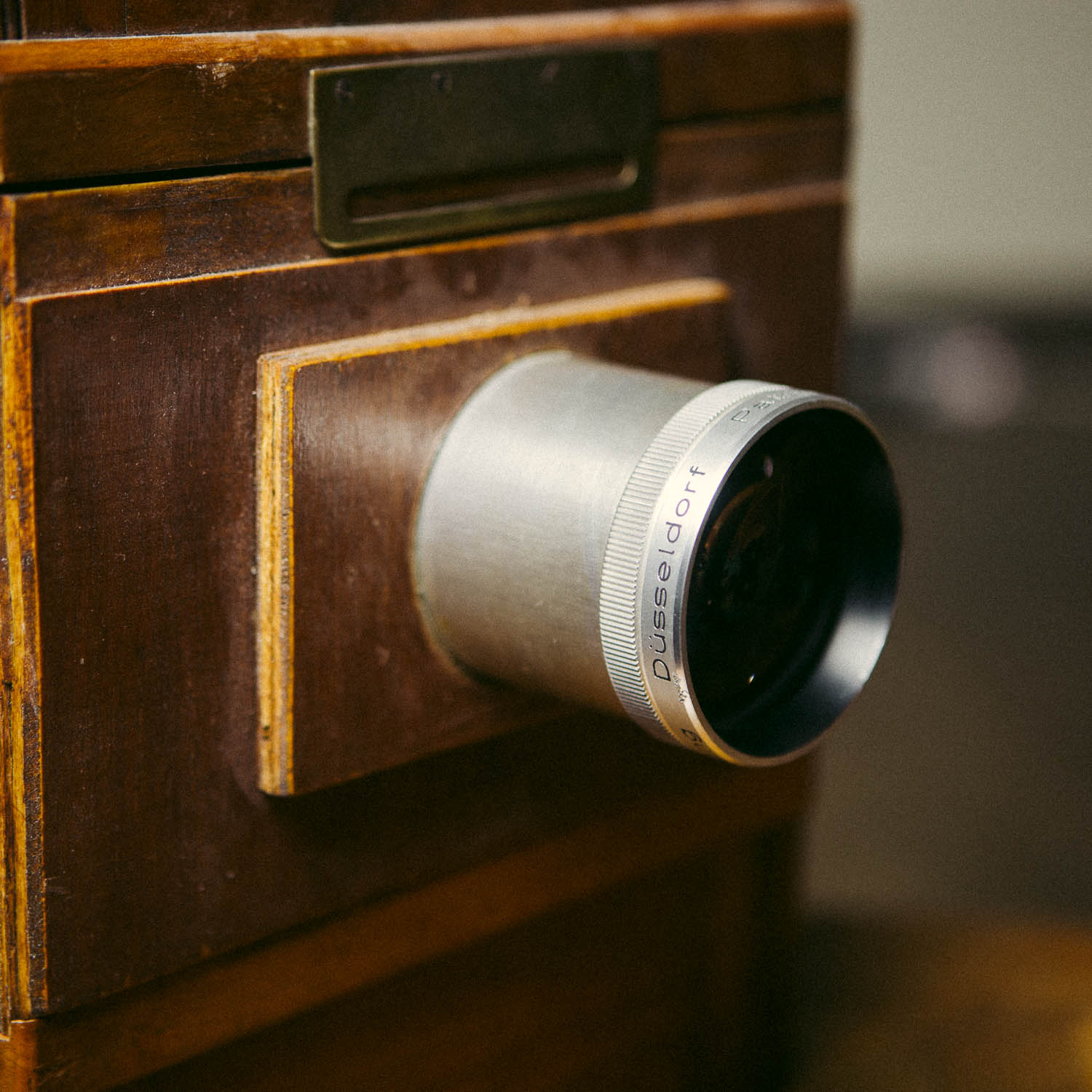
"Ed. Liesegang Dusseldorf Patrinast 1:3,5/200"
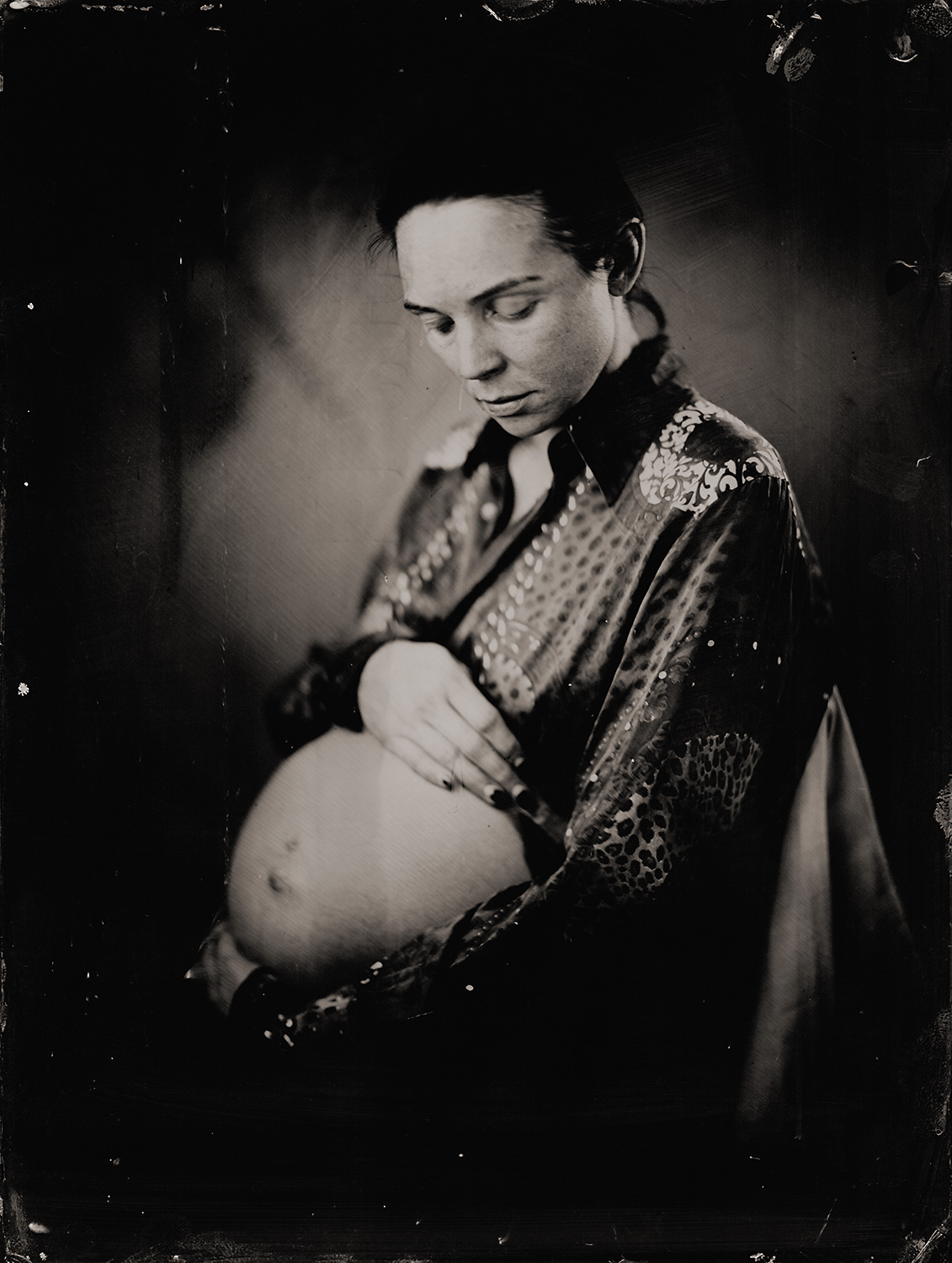
As the name implies this is a fast f/3.5 200mm lens. I found it in a box full of random photo junk at a flea market and bought it for 2 euros — not expecting much. But any lens for 2 euros is good I guess. The inner barrel with the lenses was mounted in an outer focusing barrel that made me suspect it came from an old 6×6cm slide projector. After removing the lens and testing it on my camera I discovered it fell just short of covering 5×7″ at infinity. The inner barrel protruded behind the last element for around 1cm or so. I carefully removed it with a hacksaw hoping for it to improve coverage, but it had little effect. Focused at infinity the image circle is about 10cm. This lens starts to cover 5×7″ at about 1.5m focus distance and just falls short of covering 8×10″ at 60cm.
Although it never really covers 8×10″ at portrait-usable distances, I must admit I really like this lens. It has a certain softness to it and I like the vignette. I've used it more than some of the better lenses I have. It just gives this really nice "old" look to the images — kind of blurry but in a nice way, very analog.
I just friction-mounted it in 8mm plywood. I made a hole slightly larger (~1mm on all sides) then glued thin rings of cardboard on the inside using PVA glue until the lens was a very snug fit. I added a zip tie on the inside just to be sure it wouldn't fall out.

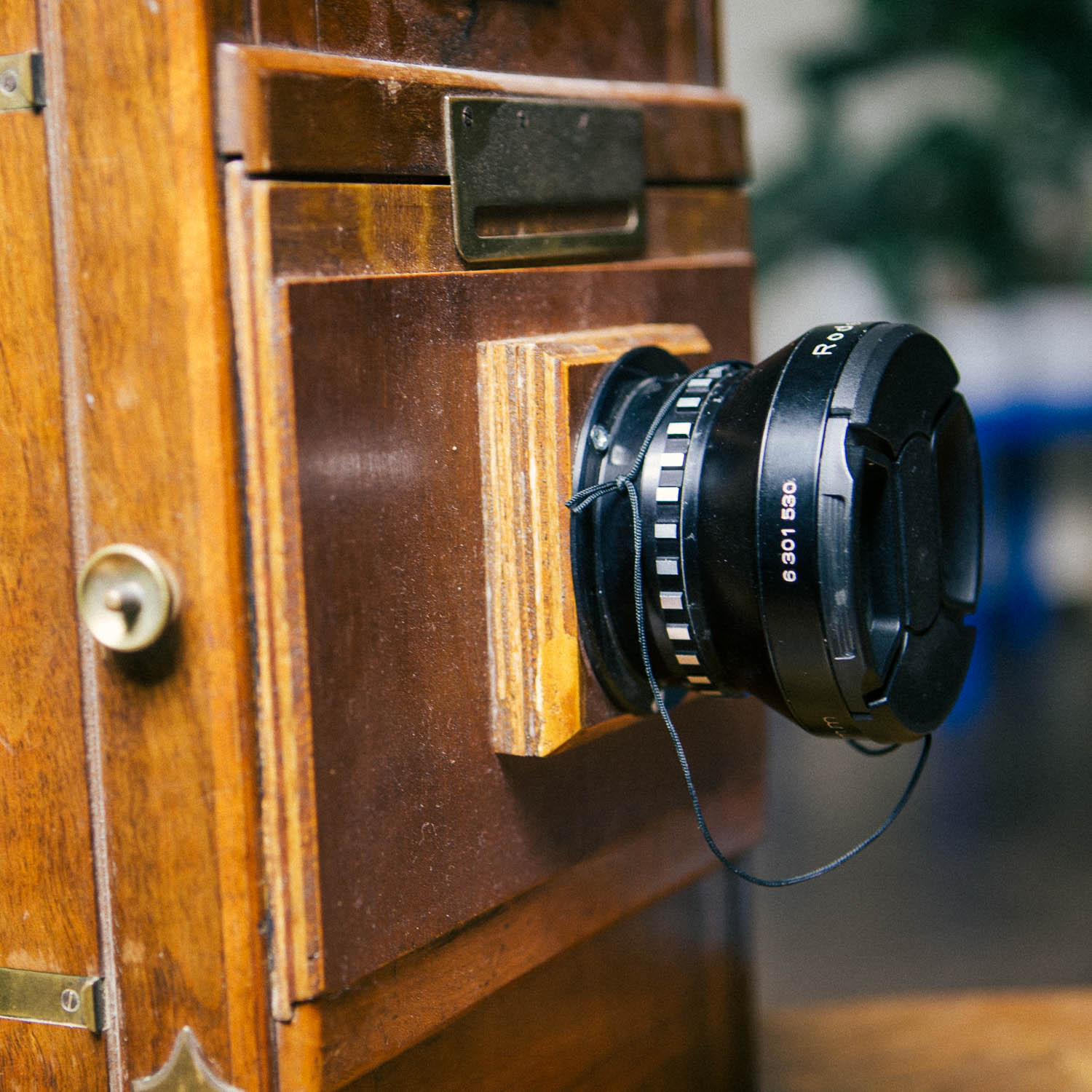
Rodenstock Rodagon R 1:5,6 f=210mm
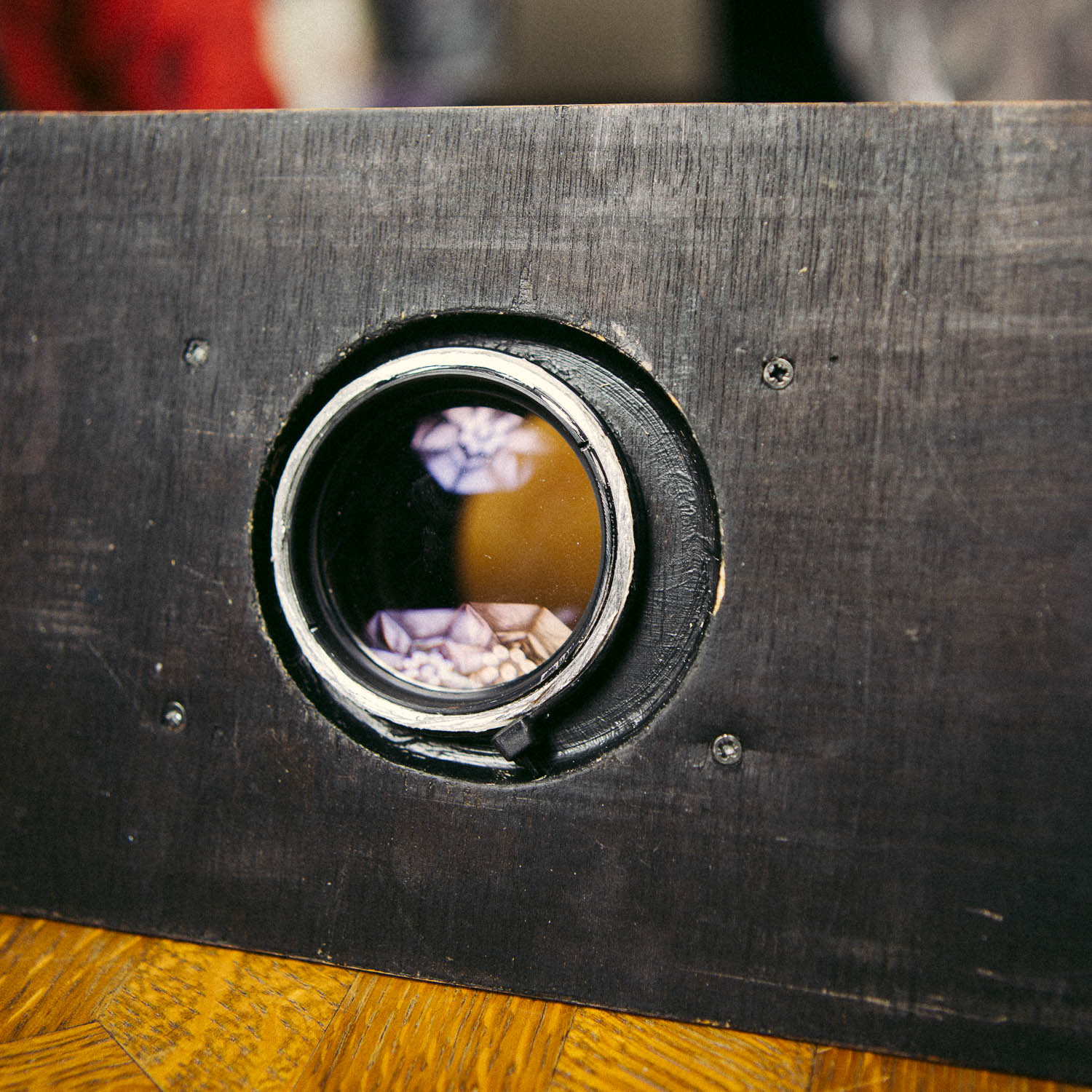
This is not a projector lens but a process lens. At f/5.6 it's relatively fast compared to most common process lenses you find. It's a "proper" lens with an aperture selection ring. This one comes from an old printing house repro camera. I bought it from a printing company that was getting rid of old analog material and paid 25 euro for it.
Note that process lenses are optimized for use around 1:1 (the image on the plate is the same size as the original) but sharpness is generally better throughout than the projector lenses. This one comfortably covers 8×10″ at all focus distances — allowing a bit of movement if focused closer. It's certainly a capable lens for wet plate but its look is a bit too "dry"/crisp for my tastes.
It has a screw fit mounting ring to make it easy to mount to any lens board. As the lens protrudes around 2cm behind the mounting ring I had to mount it a bit raised so it could fit on the slide-on lens boards for this camera.
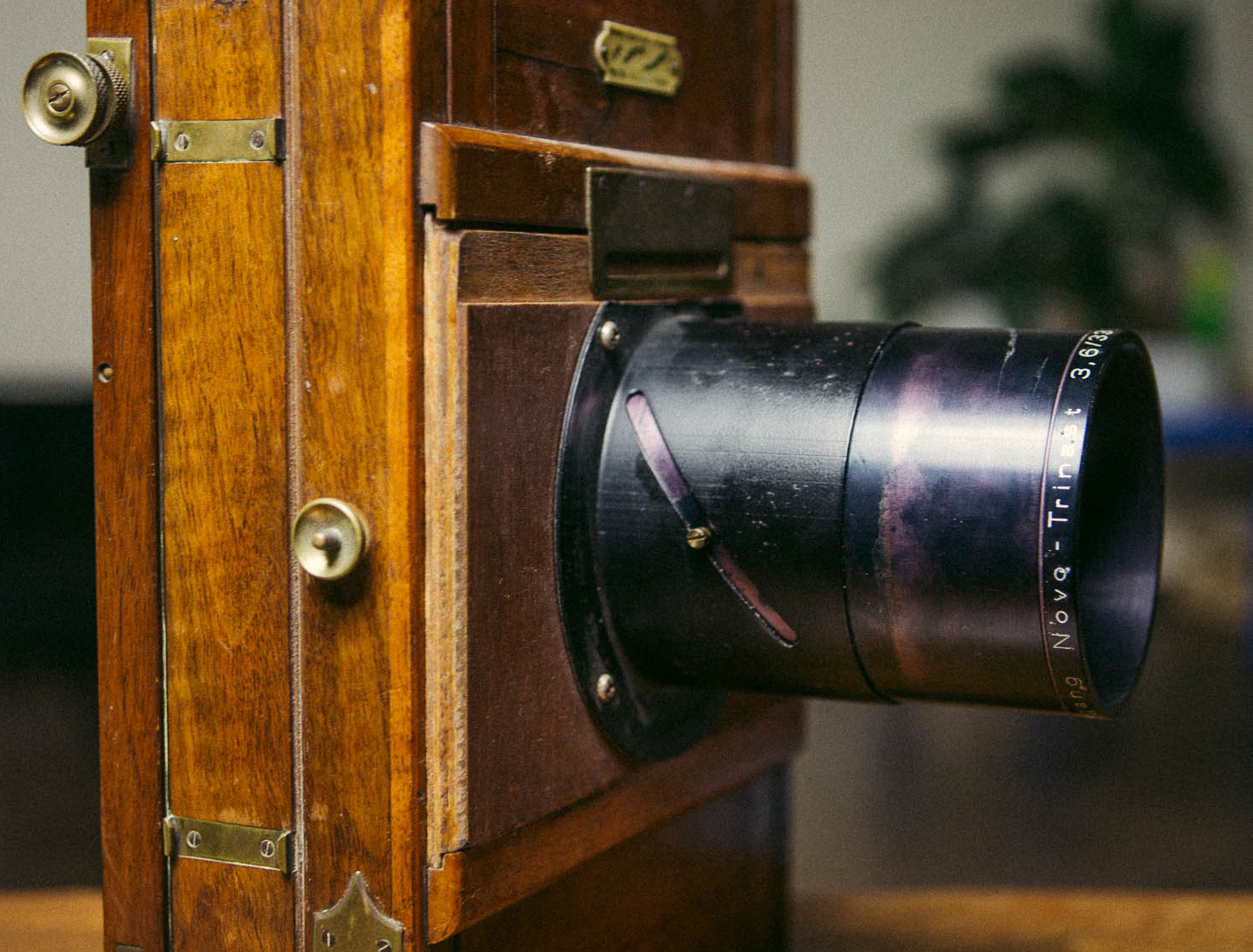
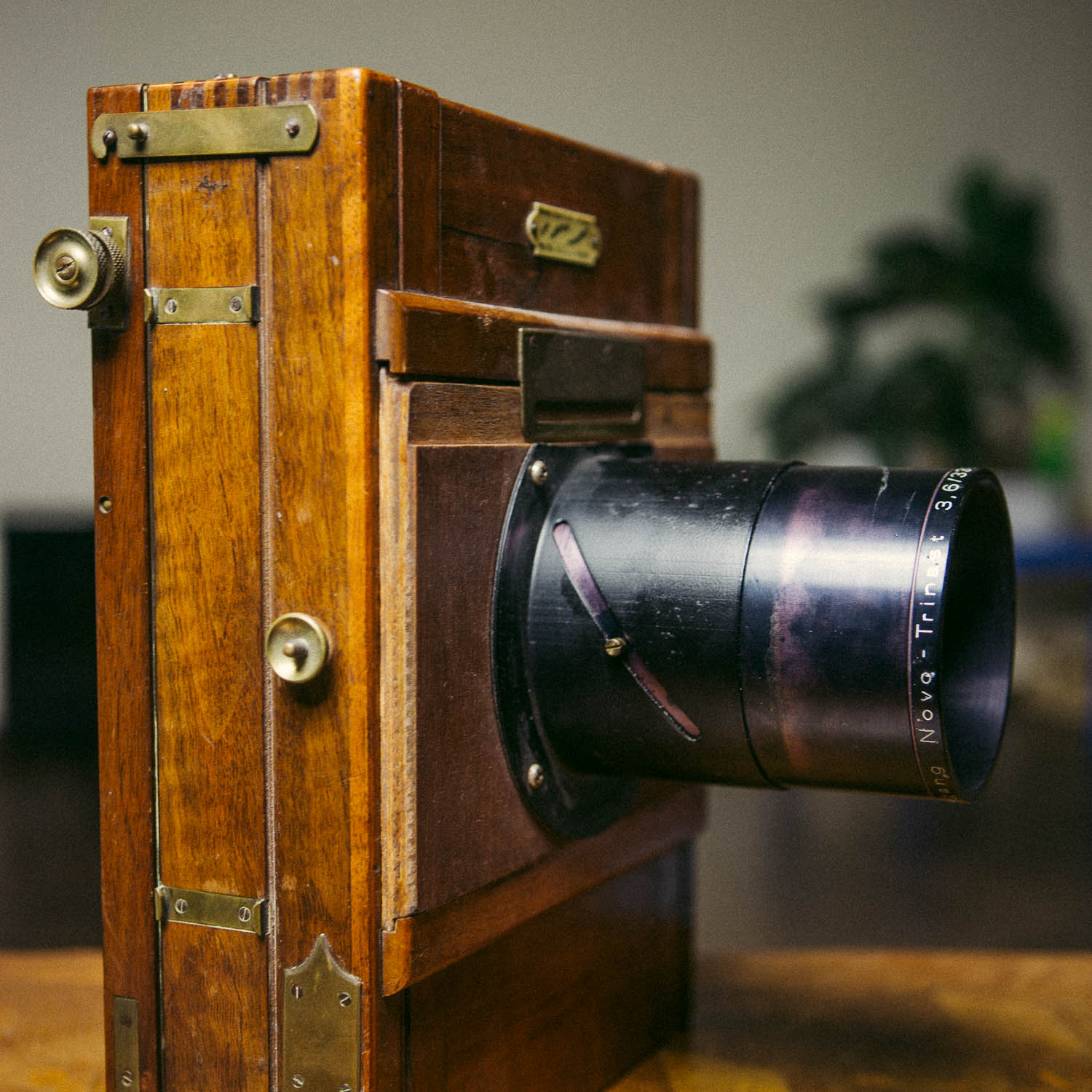
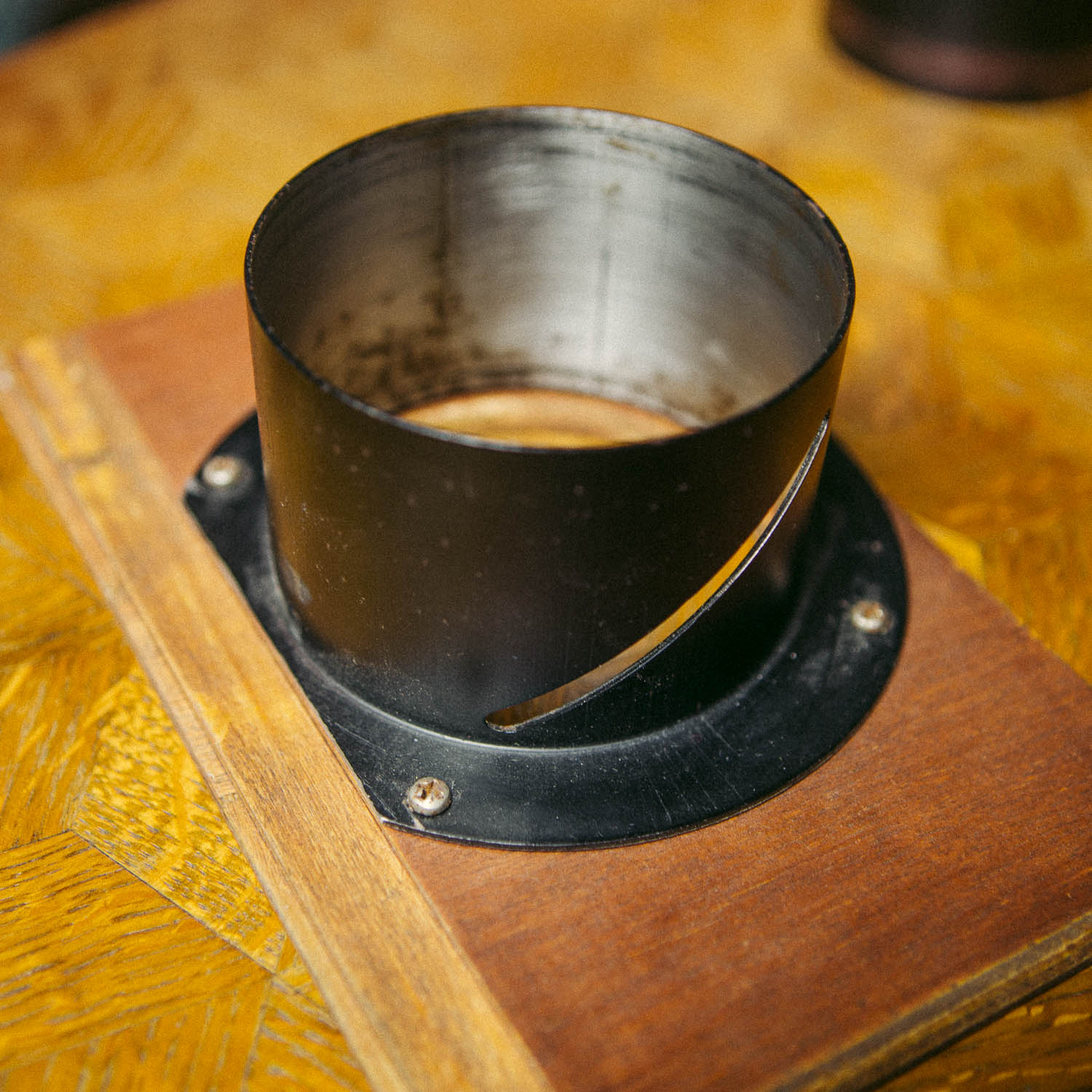
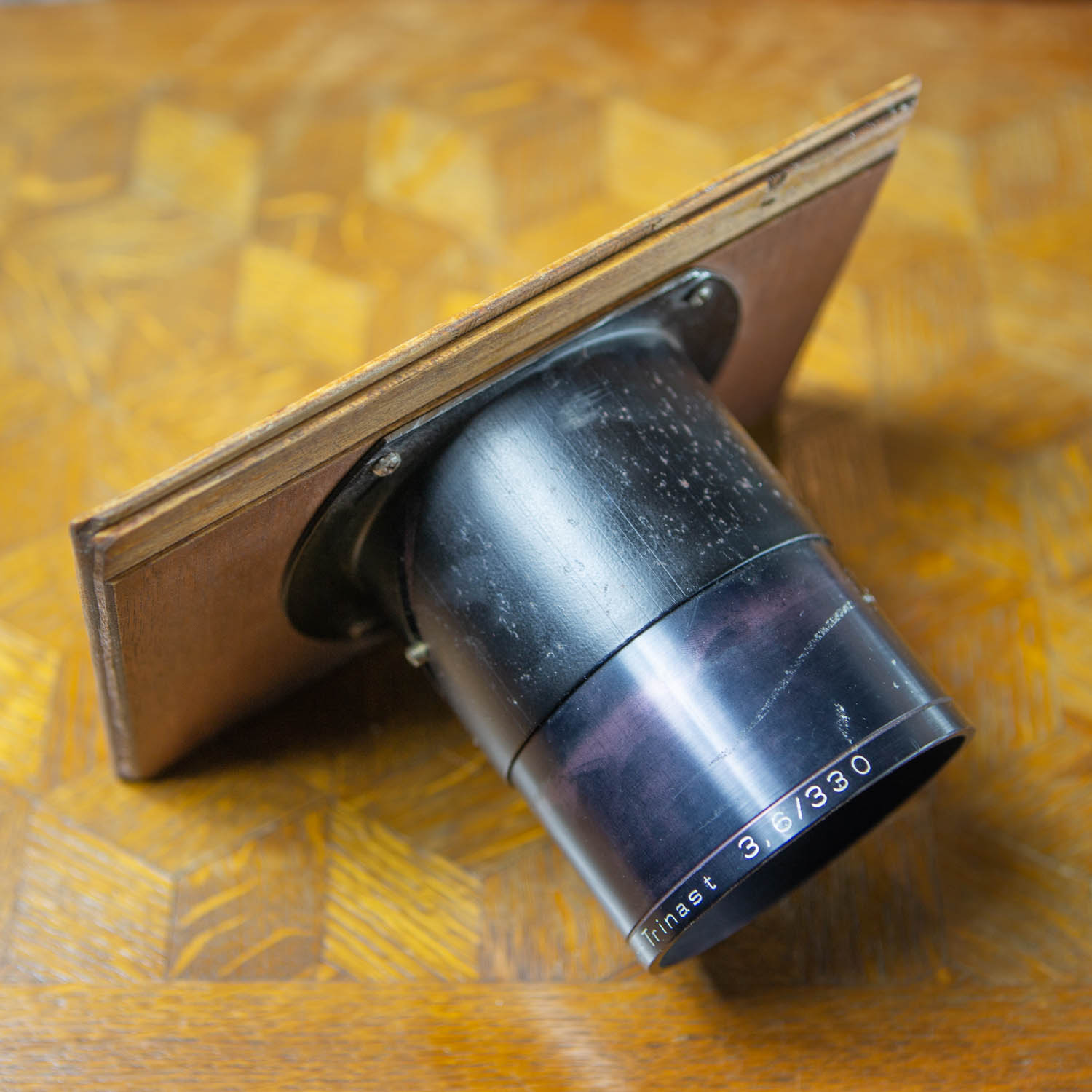
Liesegang Novo – Trinast 3,6/330
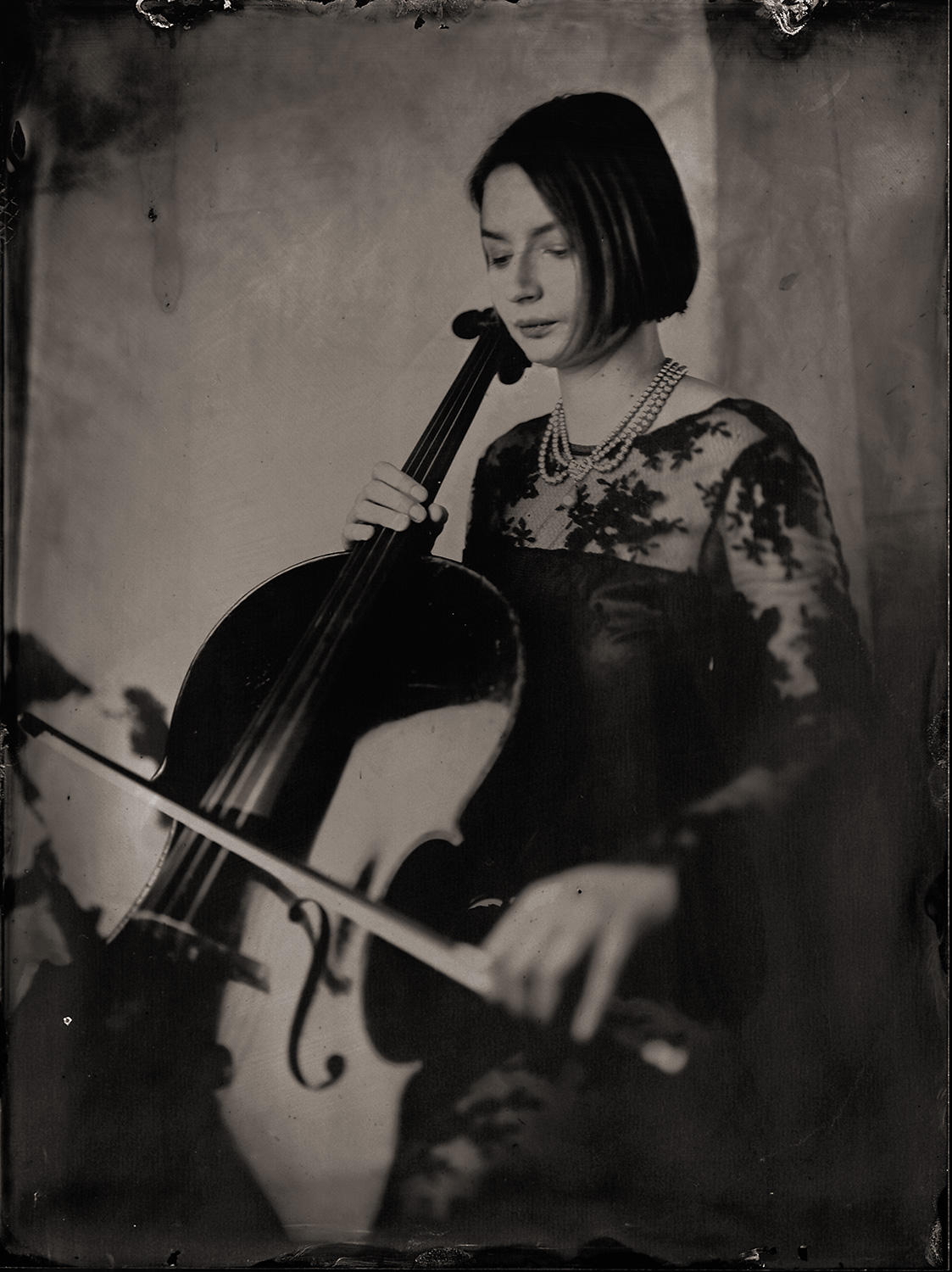
A f/3.6 lens of 330mm. I got this one as part of a fully functioning episcope projector for 25 euro. It particularly interested me because f/3.6 at 330mm should be an ideal focal length and aperture for 8×10″ wet plate portraits, while being on an episcope gave me reason to believe it would have adequate coverage.
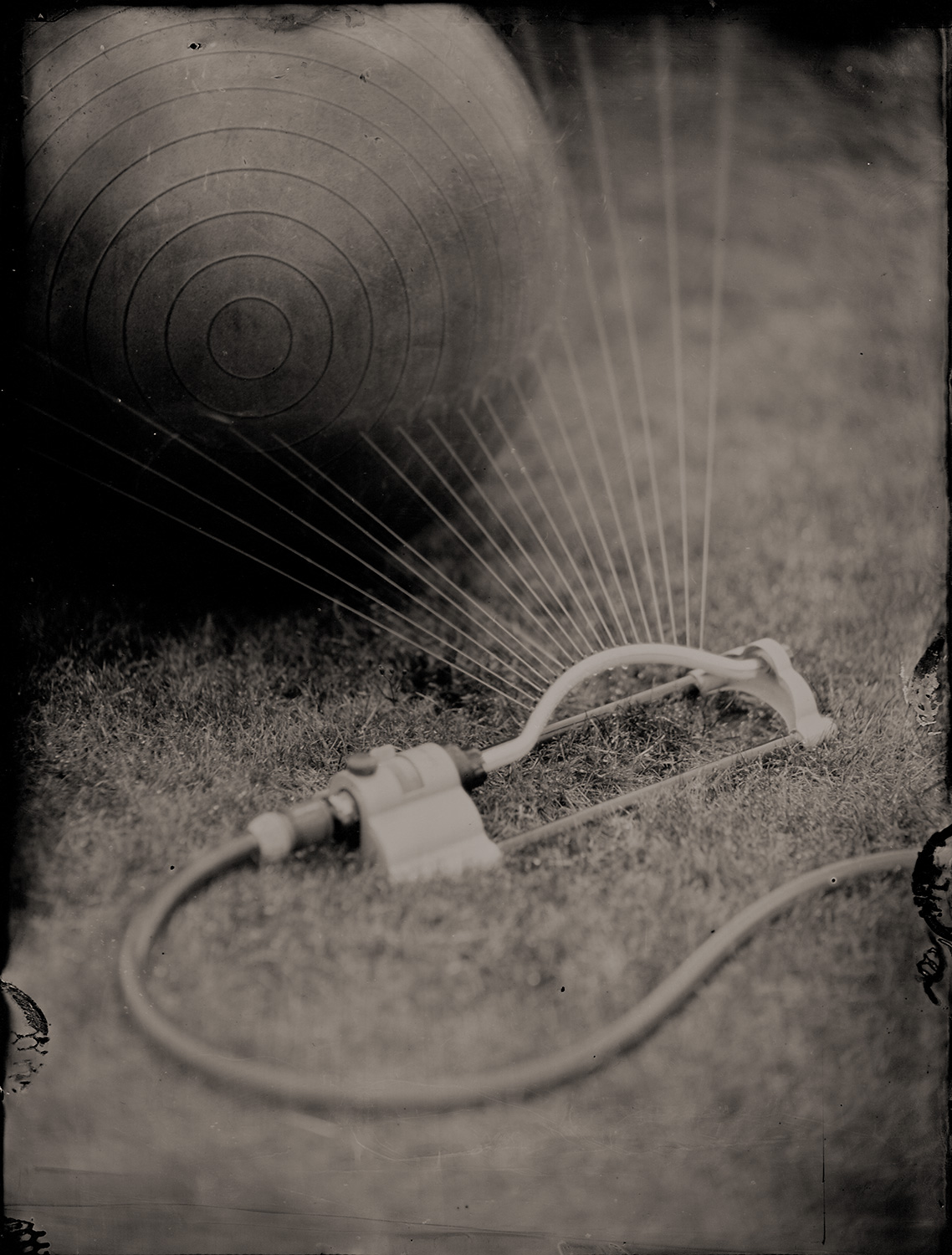
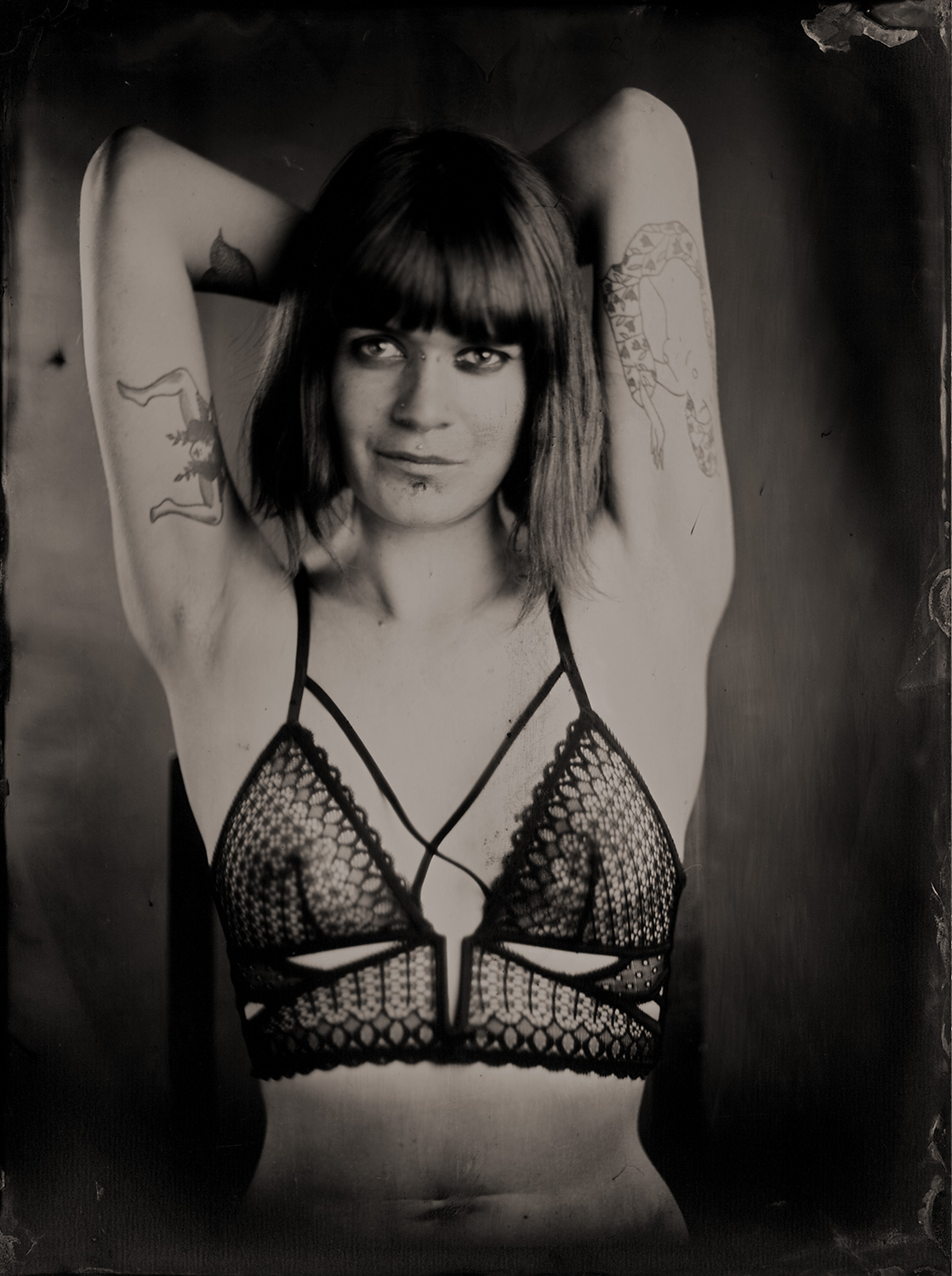
I was not disappointed: it covers 8×10″ and gives me the sharpness I would expect. Focused at infinity the image circle is around 17cm. Focused at about 100cm it covers the whole 35 × 45cm ground glass (although I would use the 18″ for that format). It's my most commonly used lens for 8×10″ at the moment. It has a similar "old" look to the Patrinast. Outdoors it's a bit too fast, but the old cardboard Waterhouse stop inside the camera trick works really nicely here.
Finally note that the garden hose sample plate below was taken using an f/8 cardboard Waterhouse stop.
Repromaster 1:9,25/213
Another process lens. A bit of an outsider here as it's rather slow, but I just wanted to document this since I found little info about it online. I bought this for 20 eur (from the same place as the Rodagon) not really knowing what it was. However, for a ~200mm lens of f/9 or so it's rather heavy and large. People naively measuring the front lens diameter to determine the aperture would probably think they have an f/3.5 lens. Online research revealed it was optimized for large image circles.
For all this glass, I had high expectations of huge image circles, but it just clips the corners of an 11×14″ plate focused at infinity. There is a trick to get it to almost cover a full 11×14″ plate at infinity: stop it down to f/45 and then pull the focus nearer. Due to the high depth of field at f/45, infinity will still be in focus when the plate gets almost fully covered. Focusing on anything closer than 150cm will cover 11×14″ at f/9.25.